
Loading...
Serving Canon City, CO and surrounding areas. (719) 618-9724
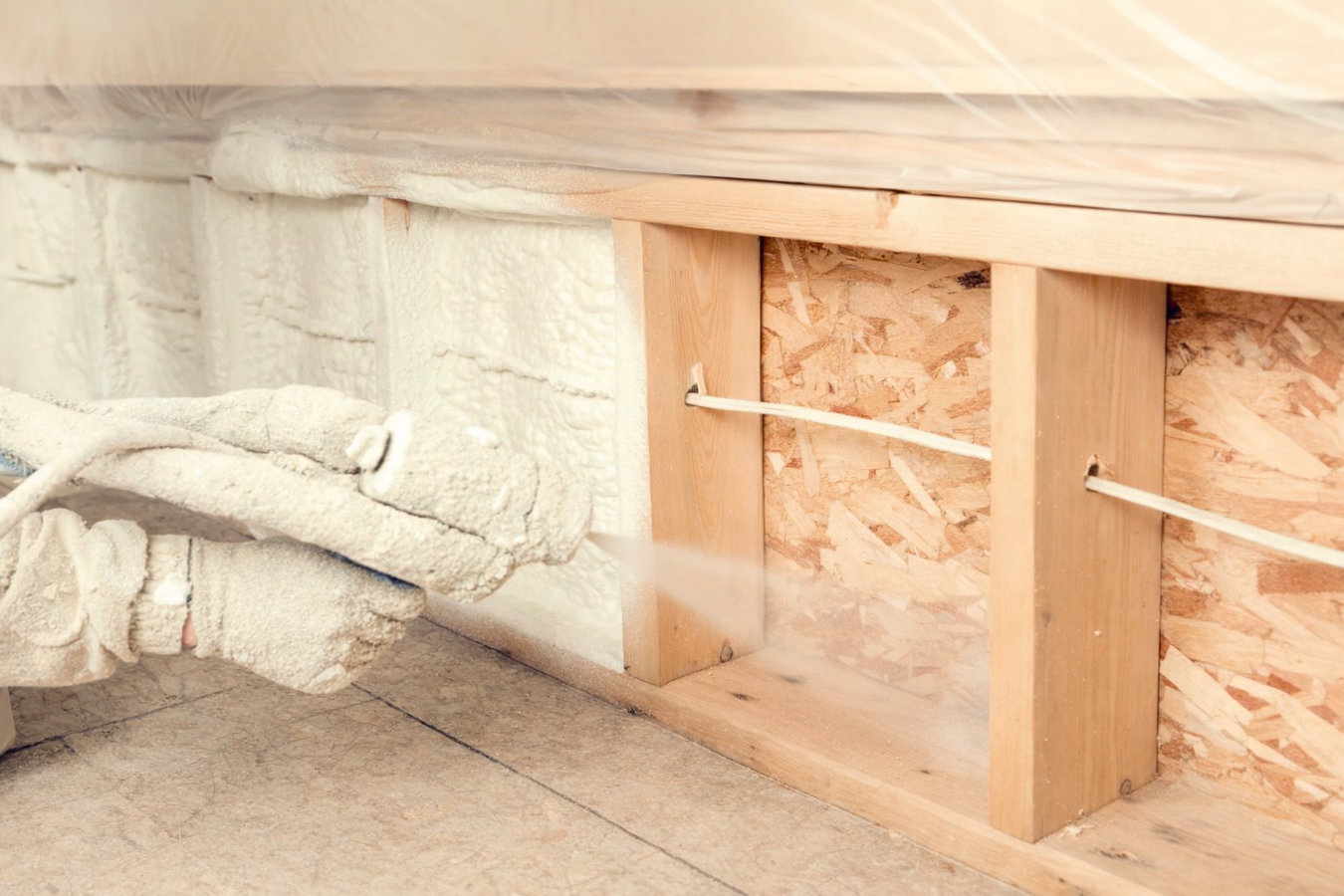
One application stops air leaks and insulates at the same time. Canon City homes get tighter, warmer, and more energy-efficient without layers of different products.
Closed-cell foam insulation in Canon City is a spray-applied product that expands, hardens, and bonds to surfaces - sealing air gaps and insulating at the same time. Most residential jobs cover a crawl space, attic, or rim joist and are completed in a single day, with homeowners staying out for 24 hours while the foam cures.
Standard insulation materials - fiberglass batts or blown-in cellulose - slow heat transfer but do nothing to stop air moving through cracks, gaps around pipes, or spaces where walls meet floors. Closed-cell foam does both jobs in a single layer, which is why homes that get it often see a bigger improvement in heating costs than homes that get traditional materials alone. If you are already considering open-cell foam insulation, comparing the two comes down to R-value per inch and moisture resistance - closed-cell wins on both, while open-cell is a better fit for interior walls where breathability matters more.
For Canon City homeowners, closed-cell foam is most commonly used in crawl spaces, basement rim joists, and attics where air leakage is the main problem and space is limited. The higher R-value per inch means you get more performance out of a thinner layer - which matters in tight spots where there is not room for thick batts.
If your gas or electric bill jumps significantly from October through February with no change in habits, heat is escaping somewhere fast. In Canon City's cold winters, an under-insulated crawl space or attic can bleed warmth fast enough to add real money to your annual heating costs. Closed-cell foam in those areas is often the single most effective fix because it stops both heat loss and air infiltration.
Cold air rising through an uninsulated crawl space makes your floors feel cold even when the heat is running. If you notice drafts near baseboards, cold spots in certain rooms, or floors that feel noticeably chillier than the rest of the house, your crawl space or rim joist is the likely source. This is especially common in Canon City's older homes, where crawl spaces were often left completely open to outside air.
If you have peeked into your crawl space or attic and seen daylight coming through gaps around pipes or joists, or noticed insulation that looks thin, compressed, or falling apart, your home is not properly sealed. Old fiberglass batts that have sagged or gotten wet lose most of their insulating value and do nothing to stop air movement. Those gaps are where closed-cell foam has the most dramatic effect.
Canon City's winter lows drop well below freezing for extended stretches, and an uninsulated crawl space exposes your pipes to those temperatures directly. If you have had a pipe freeze or burst, or if a plumber has warned you that your pipes are at risk, insulating the crawl space walls and rim joists with closed-cell foam is one of the most reliable ways to keep that from happening again.
We apply closed-cell spray foam to crawl spaces, attic cavities, rim joists, basement walls, and exterior wall cavities during construction or renovation. Crawl space encapsulation with closed-cell foam is the most common job we do - it seals the floor system, keeps moisture out, and brings the temperature in the crawl space much closer to the rest of the house. For homeowners comparing products, the main alternative is spray foam insulation as a category, which includes both closed-cell and open-cell options - we will walk you through which formula makes sense for your specific situation and budget.
Rim joist insulation with closed-cell foam is one of the most cost-effective projects in an older Canon City home. The rim joist is the band of framing that sits on top of your foundation wall, and it is usually full of gaps - every pipe, wire, and post that passes through it is a potential air leak. A two-inch layer of closed-cell foam applied across the entire rim joist seals all of that in one pass and adds meaningful R-value in a space that cannot hold traditional batts reliably.
Best for older homes with open or vented crawl spaces where cold air, moisture, and pests are getting in through the floor system.
Ideal for any Canon City home with drafts near the floor - seals every gap in the band joist in a single application.
Suits homes with complex roof lines or cathedral ceilings where there is not enough space for standard batt or blown-in insulation.
Canon City sits at roughly 5,300 feet in the Arkansas River valley and experiences some of the widest daily temperature swings in Colorado - summer highs can top 90 degrees and winter lows regularly drop below 10. That range puts constant pressure on your home's thermal envelope, and it is the main reason closed-cell foam outperforms other materials here. It does not shift, compress, or lose shape as temperatures change, which means the seal you get on day one is the same seal you have five winters later. Homeowners in Canon City and the surrounding communities near Pueblo West deal with similar climate conditions, and we work in both areas regularly.
A significant portion of Canon City's residential neighborhoods - particularly those near downtown and the older streets off Royal Gorge Boulevard - were built before modern insulation standards existed. Homes from the 1940s through the 1970s were often constructed with minimal materials or nothing at all in crawl spaces and rim joists. Those irregular old surfaces - cracked concrete, rough-cut lumber, gaps around original plumbing - are exactly the places where closed-cell foam performs best, because it bonds and seals regardless of the shape of the surface it touches. Canon City's dry climate reduces some moisture risk, but spring snowmelt and periodic heavy rain still reach crawl spaces in older homes, and the moisture resistance built into closed-cell foam protects against those events too. For technical background on how spray foam insulation is regulated and evaluated, the Spray Polyurethane Foam Alliance publishes installation standards and homeowner guidance that reputable contractors follow.
We ask basic questions about the area you want insulated, your home's age, and whether you have had any insulation work before. You will hear back within one business day. Fall booking windows can be tight - the earlier you call, the better your scheduling options.
We walk through your crawl space, attic, or rim joist area to check the size, access, existing materials, and any moisture or structural issues that need to be addressed first. You get a written estimate before anything is scheduled, and we explain exactly what we plan to spray and why.
Before the crew arrives, clear access to the work area and arrange to be out of the home with all children and pets. Plan to stay away for at least 24 hours after spraying. Your contractor gives you a specific return time based on the job size.
The crew arrives with specialized spray equipment, suits up in protective gear, and gets to work. The foam expands and hardens within seconds and most jobs finish in a single day. Before they leave, ask for a walkthrough - you should be able to see even coverage with no thin spots or gaps.
We walk the space with you, explain what we see, and give you a written quote before you decide anything.
(719) 618-9724Spray foam requires specialized equipment and training that general insulation contractors may not have. We work with closed-cell and open-cell foam regularly, which means the application is consistent and the curing conditions are managed correctly. A crew that primarily does blown-in or batt work is not the right crew for spray foam.
Contractor availability in Canon City is more limited than in larger Colorado cities. We are based locally and keep our schedule manageable so we can respond within one business day and show up when we say we will. Scheduling in late summer gives you the best window before fall demand closes the calendar.
Qualifying spray foam insulation may be eligible for a federal energy efficiency tax credit. We provide the invoice and product documentation you need to claim it. Check current eligibility requirements with your tax preparer or at the IRS.
We assess your home and explain exactly what we recommend and why before quoting a price. If a simpler or less expensive solution would serve you just as well, you will hear that from us before anyone picks up a spray gun. No pressure, no obligation, no work without your approval.
These are the specifics that separate one contractor from another in a smaller market like Canon City. Homeowners here deserve a crew that shows up prepared, does the job right, and is still reachable if a question comes up a year later.
A lower-density foam option that is better suited for interior walls and spaces where breathability and sound dampening are the priority.
Learn MoreAn overview of all spray foam options - including when closed-cell vs. open-cell makes the most sense for your Canon City home.
Learn MoreFall booking slots fill fast - call now or request an estimate online before the calendar closes and you are left waiting until spring.